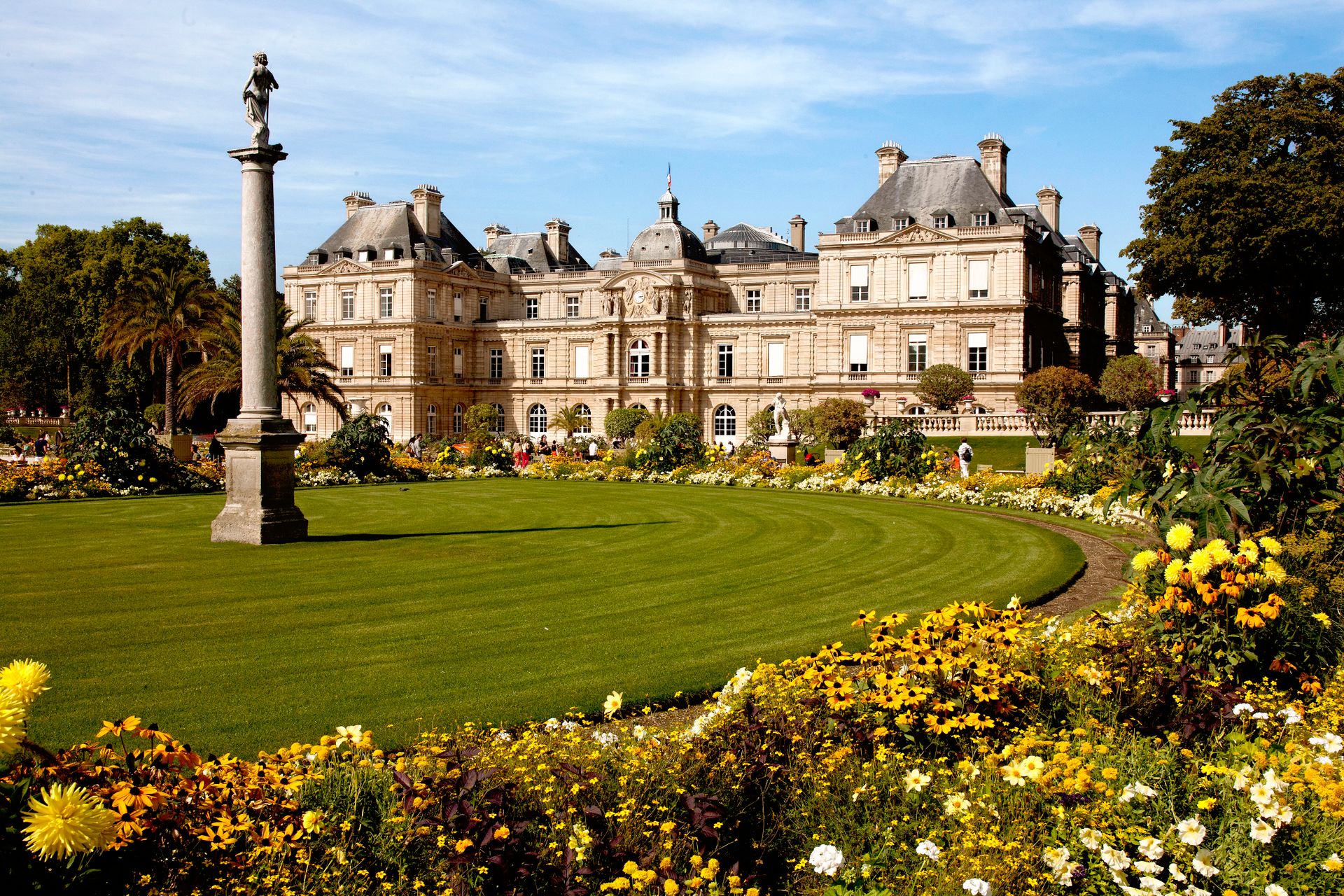
Saint-Germain-des-Prés — the literary Left Bank. The cafés of Sartre and Hemingway, the green calm of the Luxembourg Gardens, the oldest church in the city, and streets of galleries, bookshops and quiet luxury.
Saint-Germain is made for wandering. A hand-picked selection of literary walks, garden visits and gourmet tastings, most with free cancellation.
A guided stroll through the literary Left Bank — the cafés of the existentialists, the oldest church in Paris, the Odéon and the Luxembourg Gardens.
Taste your way through the quarter — cheese, charcuterie, pastries and wine — past Café de Flore, Les Deux Magots and Saint-Sulpice with a local guide.
Guided walks and tickets centred on the Jardin du Luxembourg — the Medici Fountain, the palace of the Senate and the most beloved park on the Left Bank.
Walk in the footsteps of Hemingway, Sartre and de Beauvoir through the cafés, publishers and salons that made Saint-Germain the mind of Paris.
Glide past the Institut de France, the Pont des Arts and the islands on a sightseeing cruise — many departing just steps from the 6th.
Timed entries and multi-day passes for the great collections nearby — the Louvre, the Orsay and more, all an easy walk across the river.
For a century Saint-Germain has been where Paris reads, argues and creates — a quarter of cafés, galleries and gardens that still feels effortlessly elegant.
The most beloved park in Paris — gravel paths, the Medici Fountain, sailing boats on the pond and the palace of the Senate rising above the flower beds. Free, and endlessly Parisian.
Café de Flore, Les Deux Magots and Brasserie Lipp — the tables of Sartre, de Beauvoir, Hemingway and Picasso, still pouring coffee on the boulevard Saint-Germain.
Saint-Germain-des-Prés began as an abbey in the 6th century. Recently restored, its painted vaults and Romanesque tower anchor the square that gave the quarter its name.
One of the largest churches in Paris, with luminous Delacroix murals and the astronomical gnomon made famous by The Da Vinci Code. The Delacroix museum sits nearby.
The Carré Rive Gauche brims with art and antique dealers; Rue de Buci and the Marché Saint-Germain overflow with flowers, cheese and oysters; bookshops line every street.
Along the quays, the domed Institut de France houses the Académie française, the Pont des Arts crosses to the Louvre, and the École des Beaux-Arts trains the next generation.
From the literary cafés of the boulevard to a sumptuous Art Nouveau bouillon, Saint-Germain is one of the best-fed quarters in Paris.
A longstanding fixture of the Latin Quarter, Gladines is celebrated for its generous Basque cuisine, abundant servings, and warm, unpretentious charm.
Café de Flore's eternal rival, facing the abbey church. A Parisian institution for breakfast, an apéritif or its own celebrated chocolat.
Opened in 1686, frequented by Voltaire and the Encyclopédistes. A theatrical, history-soaked dining room serving French classics.
A breathtaking 1906 Art Nouveau dining room serving generous, affordable bistro classics — one of the best-value beautiful rooms in the city.
A landmark Alsatian brasserie of mirrors and ceramics, long favoured by writers and politicians. Choucroute, sole and people-watching.
An elegant seafood institution decorated by Cocteau, opposite the Odéon theatre — oysters, bouillabaisse and a famous terrace.
Gardens, great churches, a painter's studio and the academy of France — the landmarks worth building your day around.
The Left Bank's great garden — 25 hectares of lawns, fountains and tree-lined alleys around the Senate palace. Sailing boats for children, chairs by the pond, and the romantic Medici Fountain.
One of the largest churches in Paris, with three Delacroix murals in the first chapel and the astronomical gnomon of Da Vinci Code fame. Free to enter.
The oldest church in Paris, founded in the 6th century. Its recently restored interior glows with painted decoration beneath a Romanesque bell tower.
The painter's last studio and apartment on the enchanting Place de Furstemberg, now a national museum with a tranquil garden. Free with a Louvre ticket.
A grand neoclassical playhouse of 1782 on its own colonnaded square, one of France's six national theatres, staging European drama.
The domed 17th-century palace on the Seine that houses the Académie française, facing the Louvre across the Pont des Arts. A defining silhouette of the riverbank.
Every garden, church, museum and café of the 6th on one interactive map. Filter by category, or click a place to locate it and open its links.
Paris is divided into 20 arrondissements that spiral outward clockwise from the centre, like a snail. The lower the number, the more central — and the 6th, on the Left Bank between the Seine and Montparnasse, is one of the most refined and walkable of all.
From here, Notre-Dame, the Louvre (across the Pont des Arts), the Musée d'Orsay and the Latin Quarter are all within a short stroll, and the Métro and RER ring every edge of the quarter.
Since 2025 the system has been simplified: paper tickets are gone, replaced by the contactless Navigo Easy card or your phone. A single Métro/RER ticket is now a flat fare, and a day pass quickly pays for itself if you ride often.
For door-to-door directions, the Bonjour RATP and Citymapper apps are the most reliable companions.
On the Left Bank in the centre of Paris, the 75006 is easy to reach and a joy on foot. Here are the essentials.
A few practical essentials to make your visit to the 6th arrondissement smooth and stress-free.
Spring and autumn are loveliest in the Luxembourg Gardens. Mornings are best for the markets and quiet churches; the cafés come alive in the late afternoon and evening.
The gardens and both churches are free. Pre-book exhibitions at the Musée du Luxembourg; the Delacroix museum is free with a Louvre ticket. Reserve a table at the historic cafés on busy weekends.
Cards are accepted almost everywhere. Service is included by law; rounding up for great service is appreciated, never expected. The historic cafés charge for the address — savour it.
Browse Rue de Buci and the Marché Saint-Germain for picnic supplies to take to the gardens, and book a Saint-Germain bistro or brasserie for dinner.
Galleries often close on Sundays and Mondays. Churches are generally open daily; lunch is 12–2:30 pm, dinner from 7:30 pm. The gardens close at dusk (gates vary by season).
Tap water is safe and free in restaurants (une carafe d'eau). Emergency number is 112. Dress modestly to visit the churches.
Compare stays, tours and experiences across the platforms travellers know best.
Each Paris arrondissement has its own guide. Hover the map to reveal a district's name, then click to open its dedicated site — you are currently in the 6th.
Visit75006.com is featured on GlobalVisitList.com — The List traces the "visit phenomenon" since the early days of the Internet, when some destinations from California picked up the expression.
Soon adopted by the Visitors Bureaus (VBs) of the most iconic destinations like Brescia, Copenhagen, London, Monaco or Singapore.
"Visit" has become a touch of glamour for over a thousand tourist websites.
It's something unique. Soon it will be considered as chic as owning a "crown jewel" or a "Van Gogh" painting.